
Equipment · 7 min read
Padel Court Lighting: What to Specify
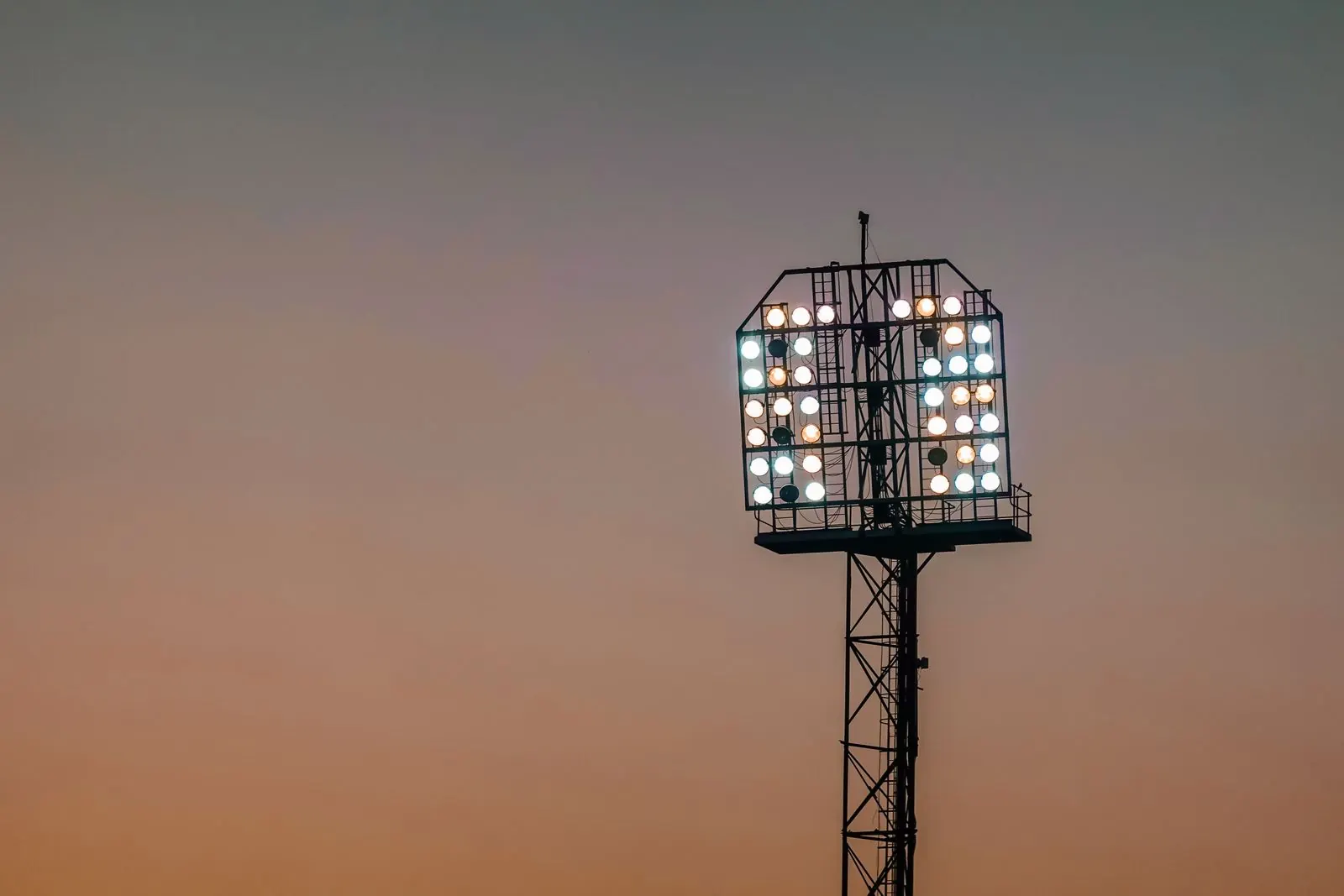
Specify uniformity and glare control, not raw brightness. Around 200–300 lux is typical for club play with competition standards higher, delivered by 8–12 LED fixtures per court positioned to keep light out of players' eyes as they look up for a lob.
Most club revenue is earned after sunset. That makes lighting a revenue system rather than an accessory — and it is the item most often cut first when a quote comes in over budget.
Brightness is the least important number
Around 200–300 lux is typical for club-level padel, with competition and broadcast standards higher. But a court that hits its average lux figure and still plays badly is common, because averages hide the two things that actually matter.
| Metric | What it means | Why it matters |
|---|---|---|
| Average illuminance (lux) | Mean light level on the court | The headline number, and the least useful on its own |
| Uniformity (min/avg) | How even the light is across the court | Dark corners make the ball disappear at the back glass |
| Glare rating | Light entering the player's eye directly | Padel players look up for lobs — glare is felt more than in most sports |
| Colour temperature | Warmth or coolness of the light | Consistency across fixtures; mismatched replacements look obvious |
| Colour rendering (CRI) | How accurately colour is reproduced | Ball tracking, and how the venue photographs |
| Flicker | Cycling invisible to the eye | Shows up badly in phone video, which is how clubs get marketed |
Fixture count and position
A padel court typically takes eight to twelve LED fixtures, mounted on poles outside the structure or on arms fixed to the frame itself. Position does more for playability than wattage.
- Keep fixtures out of the sightline of a player tracking a lob
- Light the back glass properly — it is where the ball is hardest to pick up
- Symmetrical layouts across the net keep both ends fair
- Structure-mounted arms save space; poles are easier to service
- Plan maintenance access before the fixtures go up, not after one fails
Indoor changes the problem
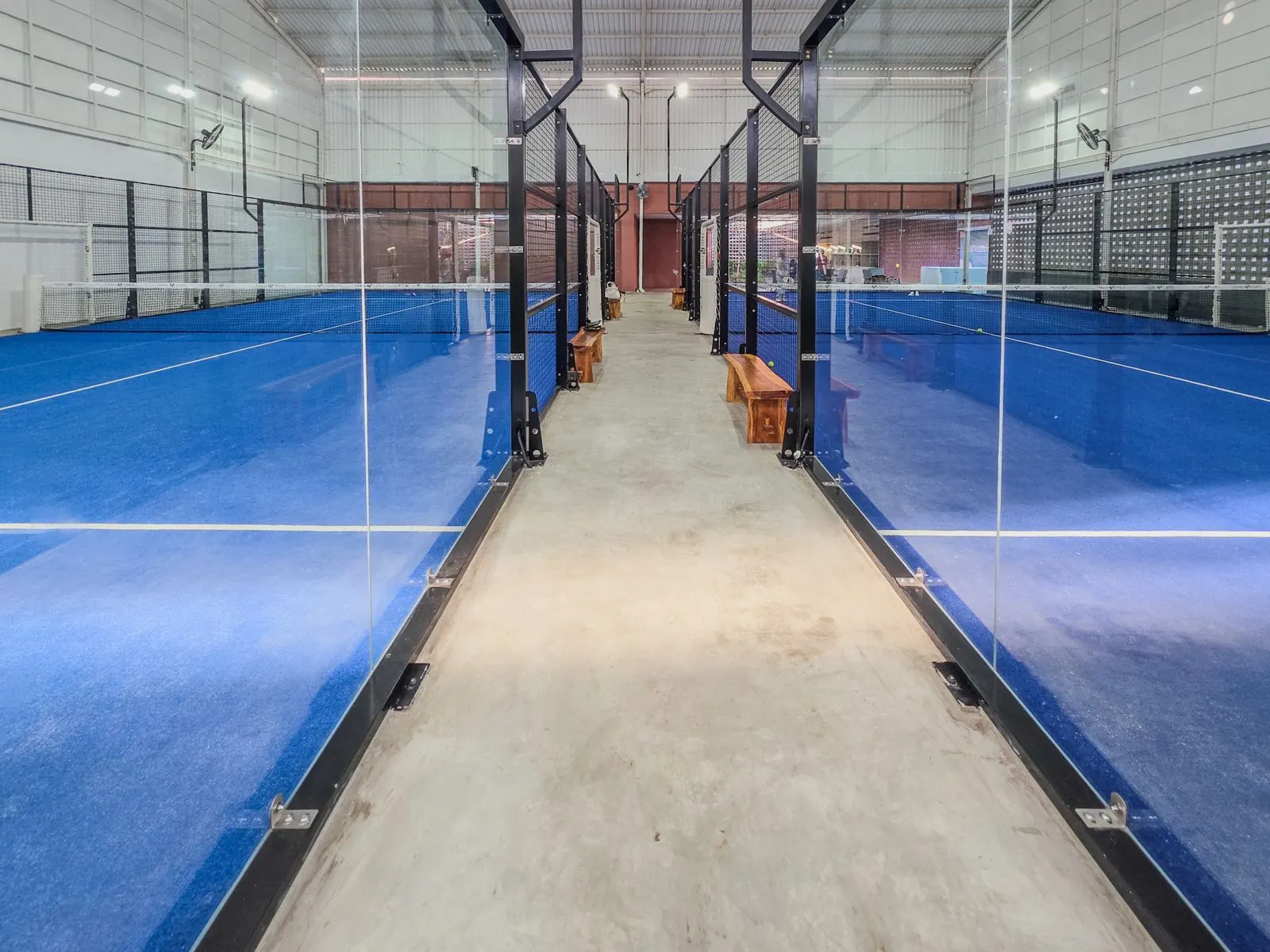
Outdoors, lighting is an evening system. Indoors it runs all day, which changes both the electrical load and the running cost. Enclosed courts also bounce light off surfaces and structure, so a layout designed for an open court will not simply transfer.
The electrical side
- Confirm the incoming supply can carry the full venue, not just phase one
- Separate court circuits so one fault does not black out the site
- Zone controls so unbooked courts are not lit
- Metering per court if you want to understand true running cost
- Backup power — a lighting failure cancels a paid booking
Browse LED floodlights, poles, mounting and control gear — or tell us the project and we will help specify it properly.
Source court lighting →Frequently Asked
Written by CourtHub Editorial. Last updated 20 August 2026. Specifications quoted here follow the sport's standard playing dimensions. Where a figure depends on your specific site, market conditions or supplier, we say so rather than publishing a number we cannot stand behind.
Build a court
Planning to Build?
Get your project started — tell us the site, the sport and the court count and we will work out what it actually needs.