
FAQ
Questions, Answered
The questions that come up in almost every court conversation — answered directly, without padding.
01
The sports
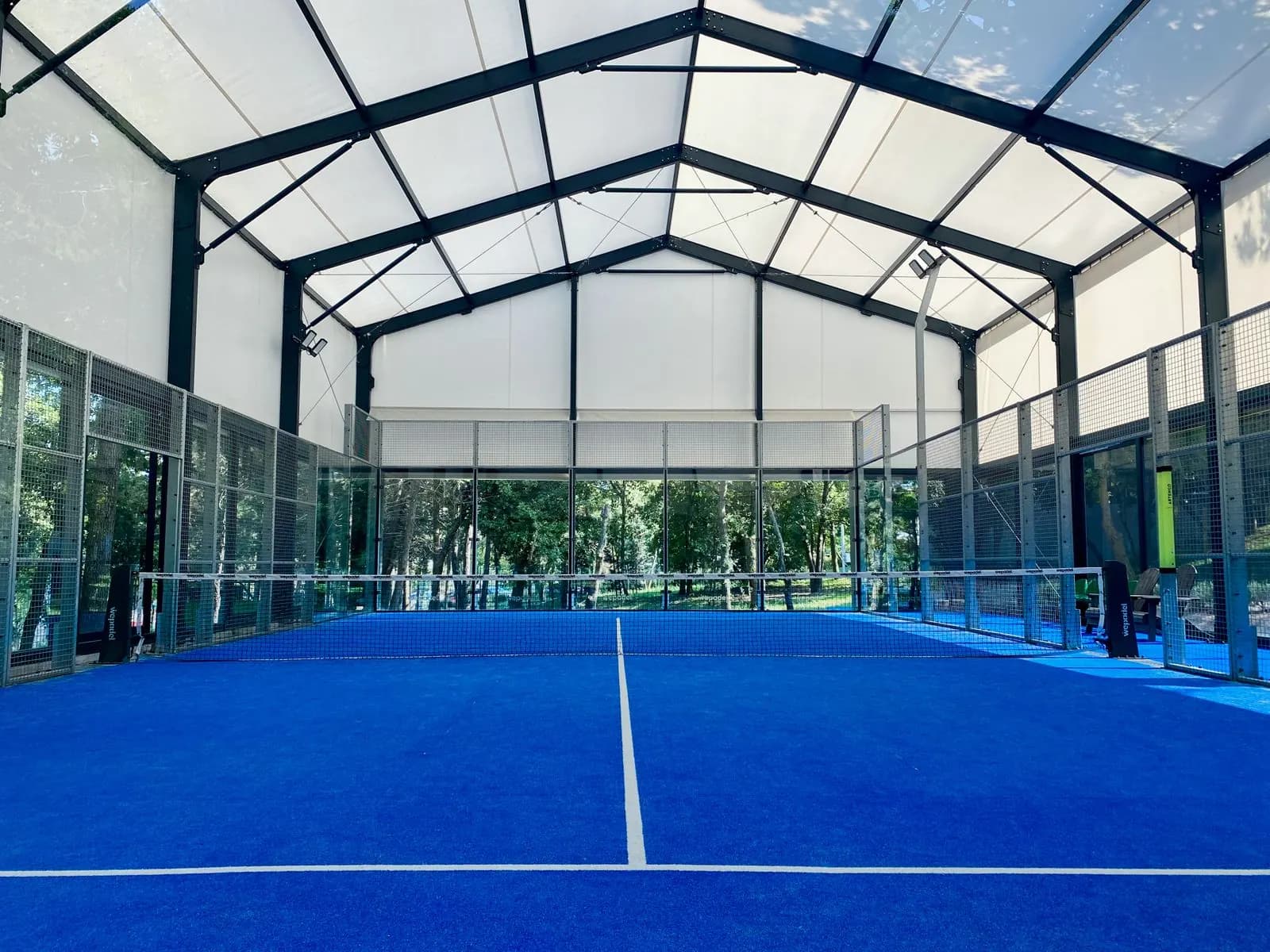
Padel is a doubles racket sport played on an enclosed court 20 m long and 10 m wide, with glass and mesh walls that are in play. Rackets are solid and unstrung, serves are underarm, and scoring follows tennis. The walls keep rallies alive, which makes it unusually easy to enjoy from the first session.
Pickleball is played on a 6.10 m × 13.41 m court with a solid paddle and a perforated plastic ball. Serves are underarm, and a 2.13 m non-volley zone either side of the net — the 'kitchen' — prevents smashing from close range. It can be played as singles or doubles.
If you have an existing hard court or sound slab and want a court sport running quickly, pickleball is the lower-risk start. If you are building a destination facility, padel's spectator appeal and doubles-only format tend to drive stronger utilisation.
02
Building a court
There is no single national figure, and any site quoting one precisely is guessing — pricing moves with the exchange rate, import duty and steel prices. A padel court is priced as five packages: groundworks and base, steel structure, glass, turf, and lighting. Compare quotes package by package rather than as lump sums.
The court is 20 m × 10 m. Allow around 22 m × 12 m per court once access is included — about 264 m². Multiple courts also need walkways between them, so the total grows faster than the court count.
Groundworks and the concrete curing period usually drive the programme, along with lead times on imported glass and turf. Structure and turf installation are comparatively quick. A realistic programme comes out of the site assessment, not a brochure.
Outdoor is cheapest to build and loses hours to heat, rain and poor air quality. A canopy captures most of the protection at a fraction of a full enclosure's cost. Full indoor gives complete control and costs the most. Which is right depends on your city and target operating hours.
Sometimes. The slab must be structurally sound, level within tolerance and drain correctly. Reusing a poor base is the most common cause of premature court failure, so it needs assessing rather than assuming.
LED floodlighting designed for uniformity and glare control rather than raw brightness. Around 200–300 lux is typical for club play; competition standards are higher. Most club revenue is earned after sunset, so lighting quality directly determines sellable hours.
Padel uses synthetic turf with silica sand infill — monofilament for durability and speed, fibrillated for grip and lower cost. Pickleball and tennis normally use acrylic hard-court systems. Badminton and squash use vinyl or sprung timber indoors.
The base should last decades if it was built and drained correctly. Turf and acrylic surfaces are wearing items whose life depends on usage hours, UV exposure and maintenance. Structure and glass last well when corrosion protection was specified properly.
03
Maintenance
Regular brushing to keep fibres upright and redistribute infill, periodic sand top-up, glass and fixing inspection, structure corrosion checks, and net and consumable replacement. Brushing and infill are the cheapest life-extension available.
If the base is sound and cracking is superficial, resurfacing is normally right. Structural cracking, ponding water or evidence of base movement point to a rebuild.
04
How CourtHub works
CourtHub is a platform. We take your project requirements and connect you with construction companies, suppliers and specialists suited to the sport, the site and the location. We do not claim to perform every service in-house.
Use the Build a Court form. It asks for the sport, the city, the number of courts, whether the build is indoor or outdoor, the site situation and your timeline — enough to understand the project without asking for anything unnecessary.
Your requirements are reviewed, and we come back to you to fill in anything missing before connecting you with suitable specialists. You will see a confirmation page as soon as the enquiry is received.
The builder and supplier network is in development. Get in touch through the contact page and we will add you to the list for when it opens.
Build a court
Still Have a Question?
If it is about a specific site or project, the fastest answer comes from telling us about it.