
Sports Facilities · 9 min read
How to Plan a Multi-Sport Facility
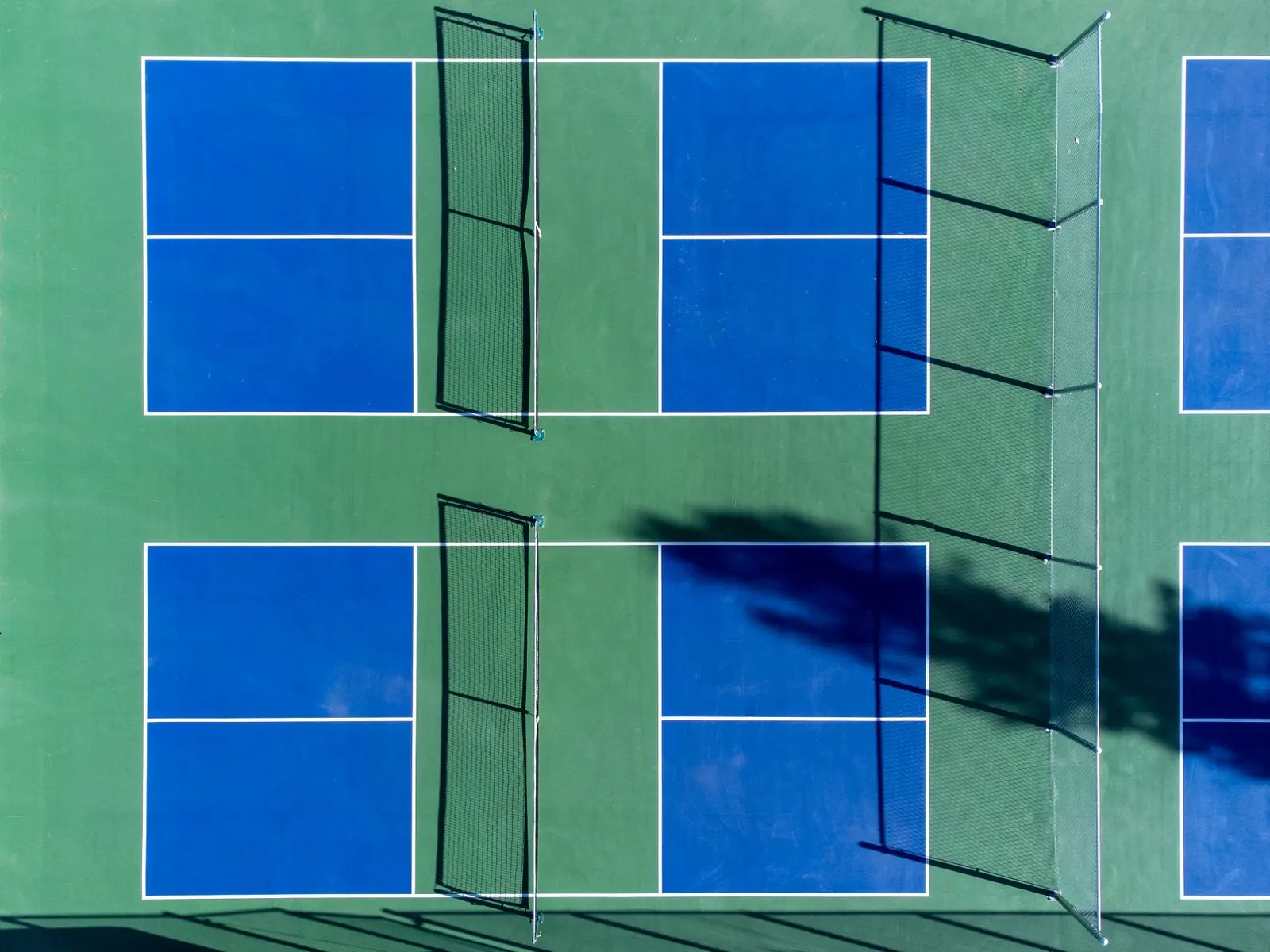
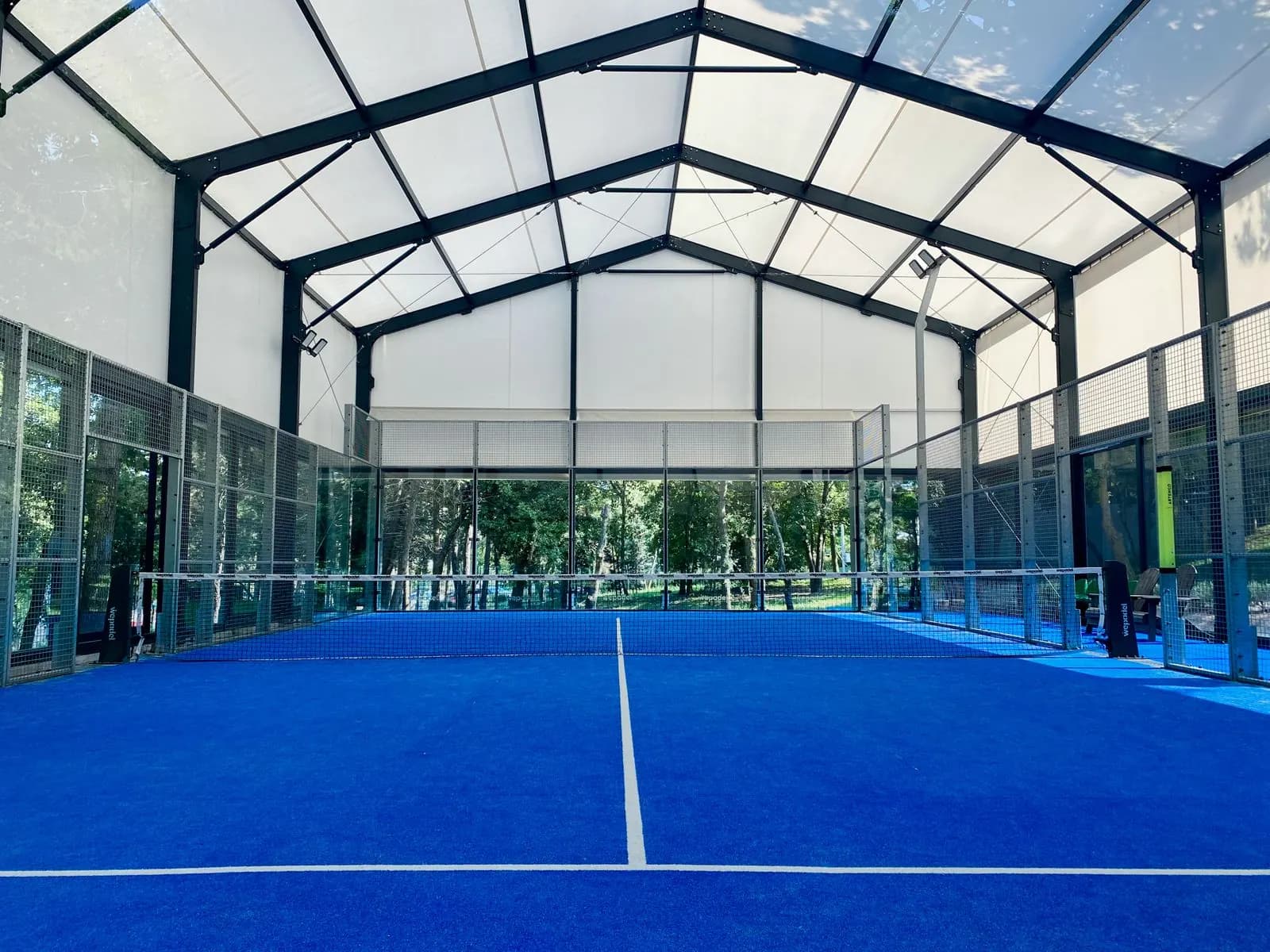
Start from court geometry, not from a wish list. Fix the court mix and orientation first, then circulation, then amenity. Padel and pickleball combine unusually well because their footprints differ enough to use awkward areas of a plot.
A single-sport venue is a straightforward geometry problem. A multi-sport venue is a sequencing problem: the order in which you fix decisions determines whether the site works or whether you spend the build fighting your own layout.
Fix the court mix first
Court footprints are fixed and non-negotiable, so they have to be the first constraint you design around — before parking, before reception, before anything.
| Sport | Playing area | Working footprint |
|---|---|---|
| Padel | 20 m × 10 m | ≈ 22 m × 12 m |
| Pickleball | 6.10 m × 13.41 m | ≈ 9.1 m × 18.3 m |
| Tennis | 23.77 m × 10.97 m | ≈ 36.6 m × 18.3 m |
| Badminton | 13.4 m × 6.1 m | ≈ 17.4 m × 8.1 m |
| Squash | 9.75 m × 6.40 m | ≈ 10.5 m × 7.2 m plus viewing |
Then fix orientation
- Avoid running the length of play straight into low morning or evening sun where the plot allows a choice
- Outdoor courts on the same site should share an orientation — mixed angles waste land
- Keep prevailing wind across the court rather than down it for outdoor play
- Check what neighbouring buildings shade, and at what time of day
Then circulation
Players should reach their court without crossing a live one. That single rule shapes most of the layout: it decides where entrances go, where walkways run, and how courts group together. Get it wrong and every busy evening produces interruptions the staff have to manage manually.
- A genuine walkway between adjacent courts, not a nominal gap
- A clear route from reception to every court
- Spectator positions that do not sit in a circulation route
- Access for maintenance plant — turf brushing and glass replacement both need it
Then amenity
The advantage of a multi-sport site is that amenity is shared across more billable court hours. Reception, changing rooms, washrooms, seating, a café and a pro shop serve every sport on the site, which is what makes the economics work better than a single-sport venue of the same size.
| Item | Scales with courts? |
|---|---|
| Court construction | Yes — directly |
| Lighting and power | Yes |
| Parking | Yes |
| Reception and staffing | Partly — one desk serves several courts |
| Changing rooms | Partly |
| Café and pro shop | No — one serves the whole site |
| Booking system | No |
Phase it so phase two is real
Most multi-sport venues are built in stages. The failure mode is a phase one that makes phase two impossible — services routed through the future court area, drainage discharging into it, or site access that only worked while the second plot was empty.
- Draw the full build, including phase two, before phase one is designed.
- Route drainage, power and water so nothing crosses the future court footprint.
- Size the incoming electrical supply for the finished venue, not the first stage.
- Keep a construction access route to the phase-two area.
- Position reception and amenity where they will still be central once phase two exists.
Programming the week
A multi-sport venue smooths demand in a way a single-sport one cannot. Padel peaks in the evening; coaching and academies fill weekday daytime; pickleball suits social and older-player sessions that do not compete for the same slots. Planning that mix before you build tells you the court ratio you actually need.
Send us the plot and the sports you want on it. We will work out a realistic court mix, layout and phasing.
Plan your facility →Frequently Asked
Written by CourtHub Editorial. Last updated 20 August 2026. Specifications quoted here follow the sport's standard playing dimensions. Where a figure depends on your specific site, market conditions or supplier, we say so rather than publishing a number we cannot stand behind.
Build a court
Planning to Build?
Get your project started — tell us the site, the sport and the court count and we will work out what it actually needs.